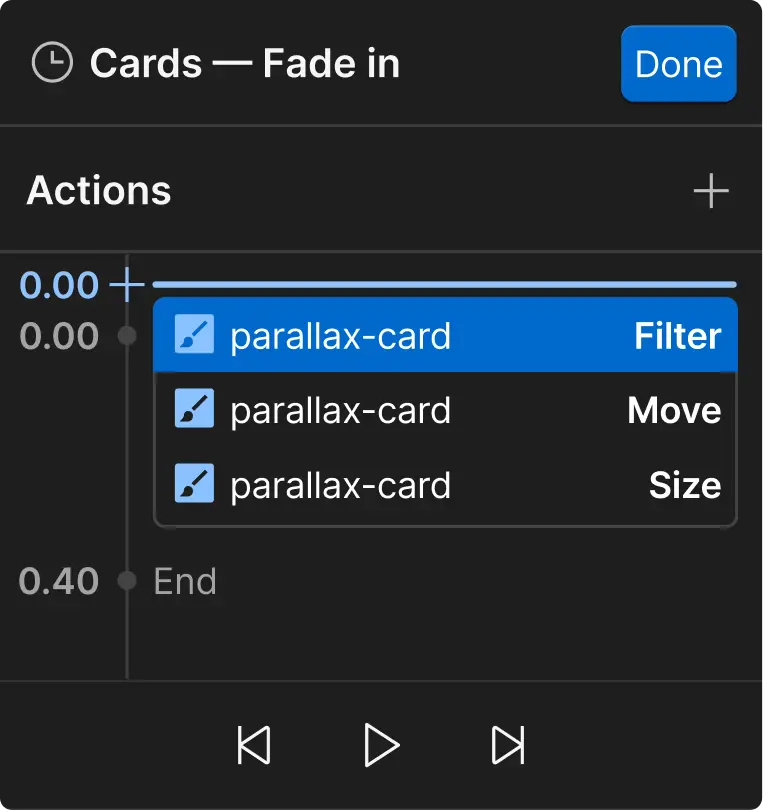
Build visually. Bring your code with you.
Webflow lets teams build visually while developers control code quality, integrations, and deployments in one system.
Trusted by over 300,000 of the world’s leading organizations




















Building for the web shouldn’t feel like maintenance work
Design sends the file. You build the site. Then come the tweaks and back-and-forth that drag out every launch.
Small changes turn into full rebuilds, timelines slip, and the work never really feels finished.
Go from design to production in one system
Webflow gives developers a real way to bridge design and development without extra setup or cleanup work. You get clean code, production-ready hosting, and full control over what ships.
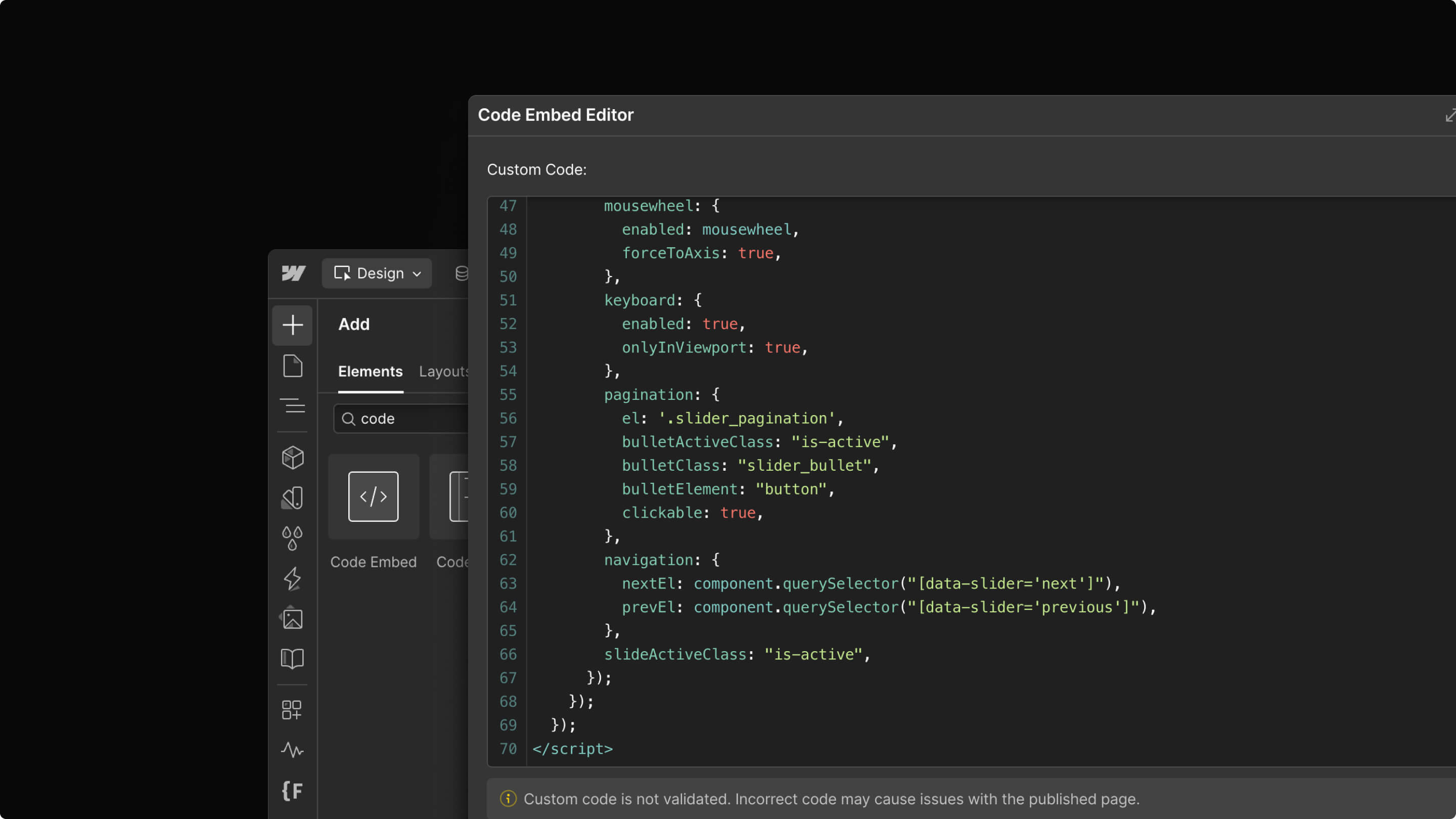
Build visually with clean code
Design and structure the site in the same environment. Webflow outputs semantic HTML, CSS, and JavaScript that meets your standards.
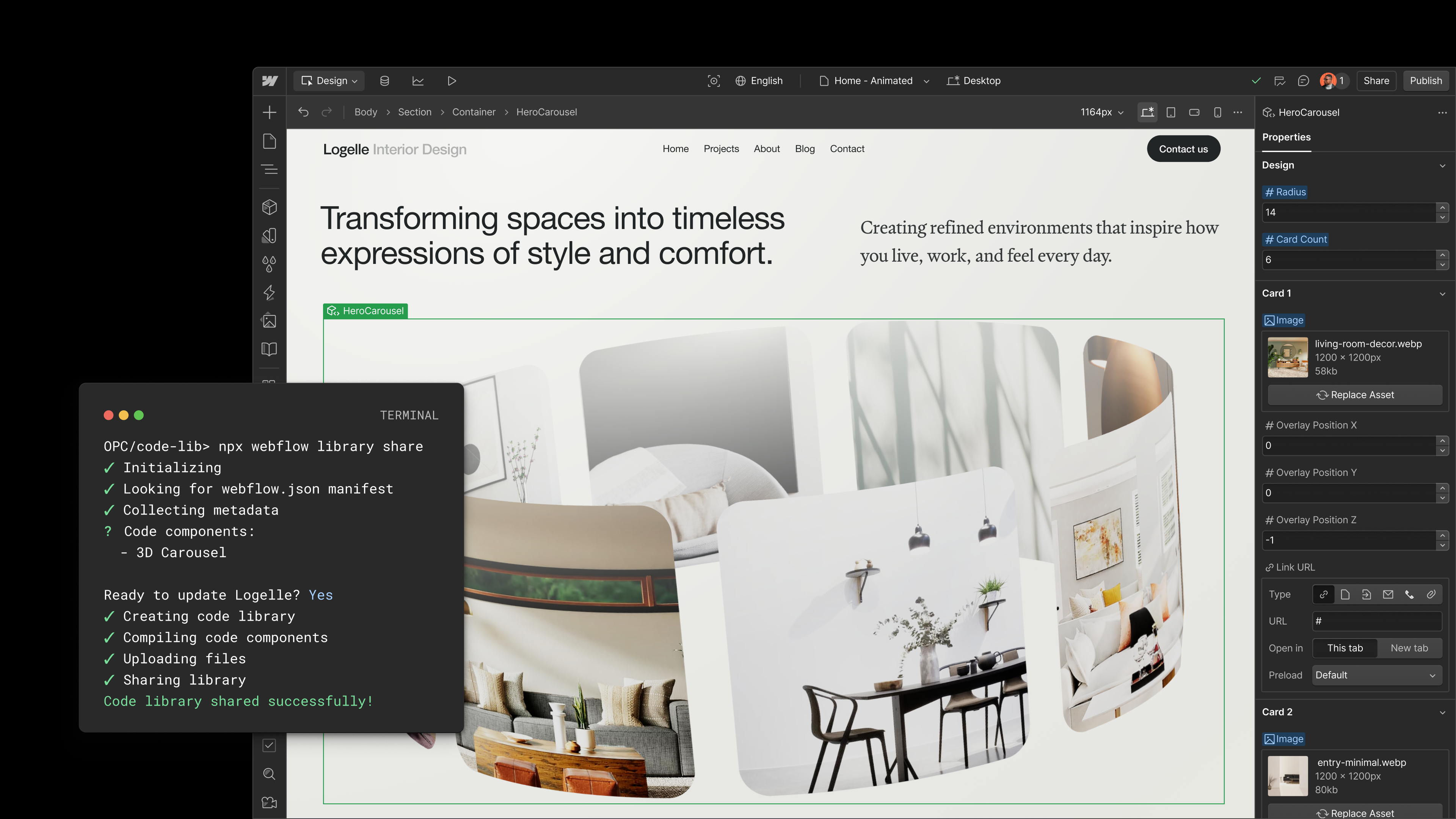
Consistent components
Keep variables and components in sync across Figma, Webflow, and React. Changes stay consistent from design to code without manual updates.
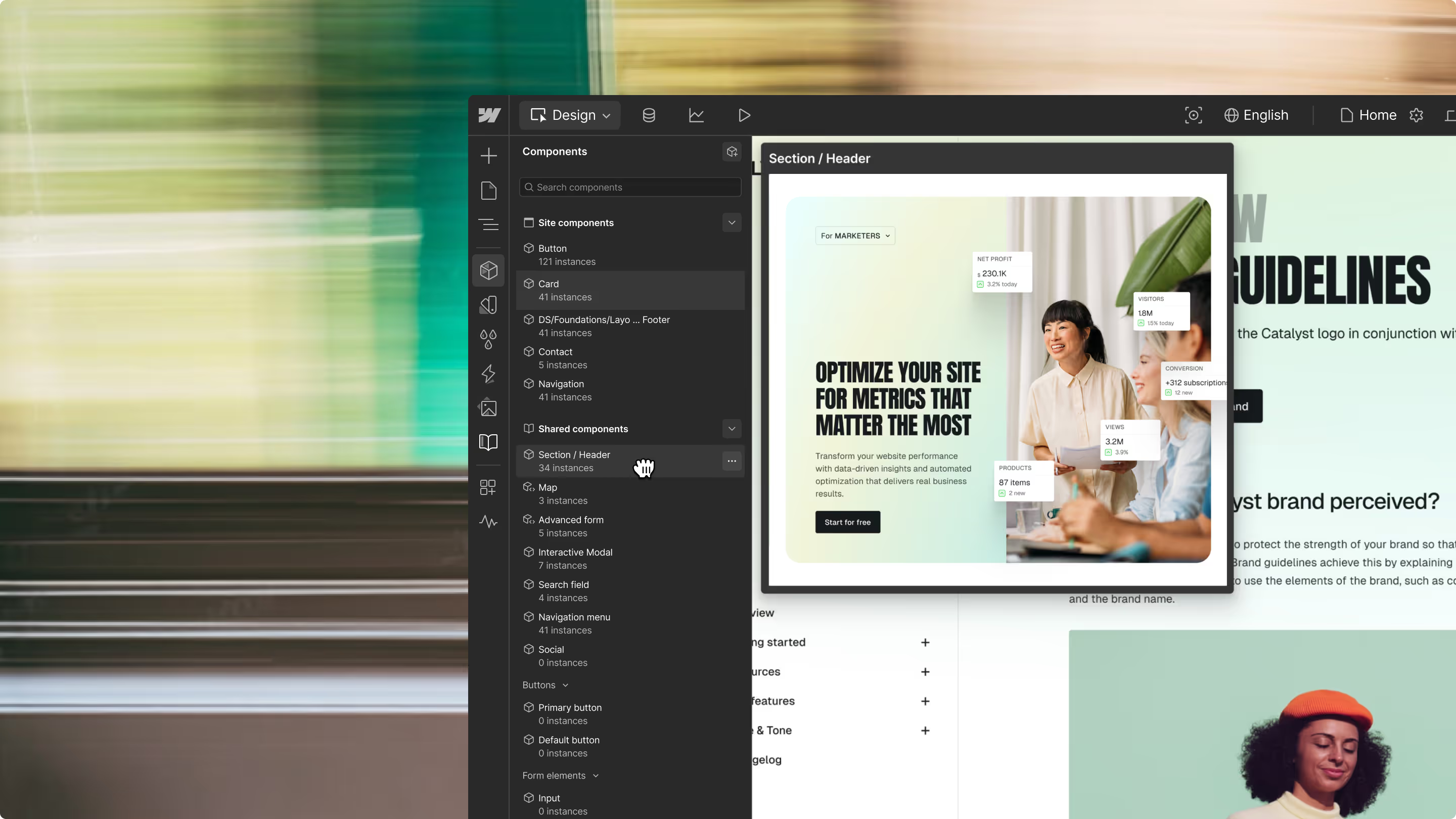
Integrated platform
Handle content, localization, and optimization in one place. Connect to your existing systems through APIs and integrations when you need to extend it.
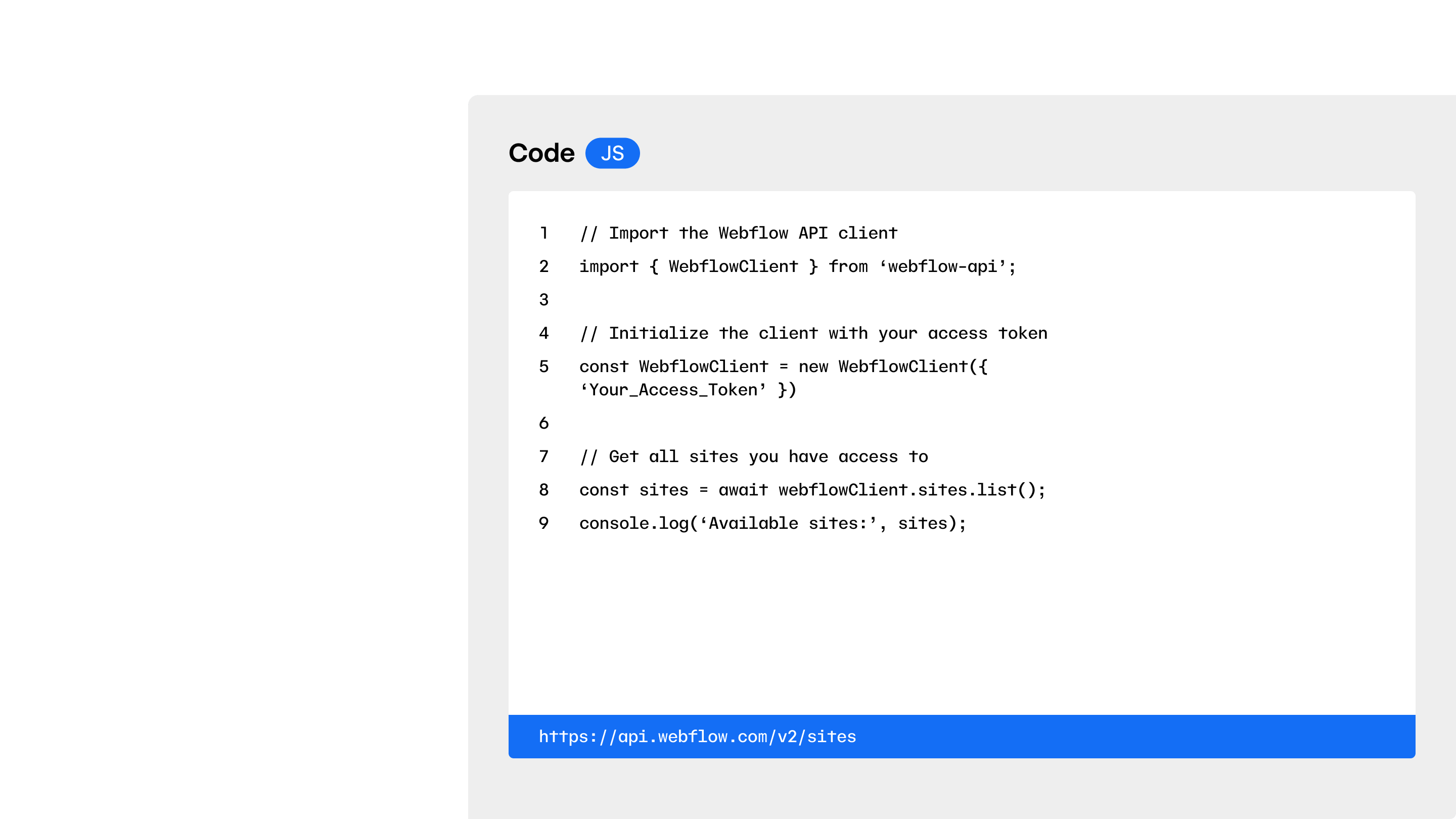
Serverless deployment
Ship directly through Webflow Cloud. No servers, no pipelines, no manual setup. Every deploy is fast and reliable.
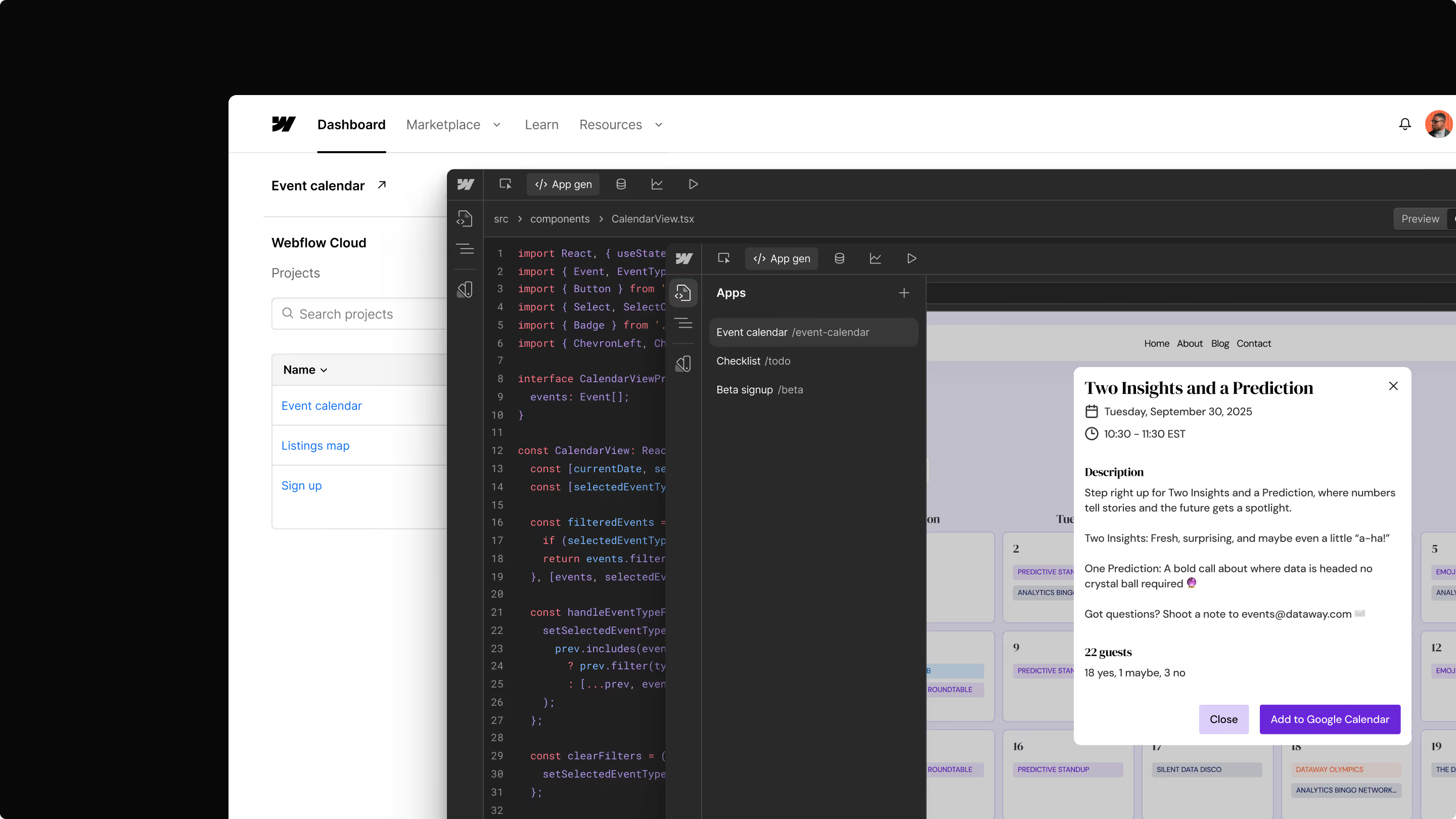
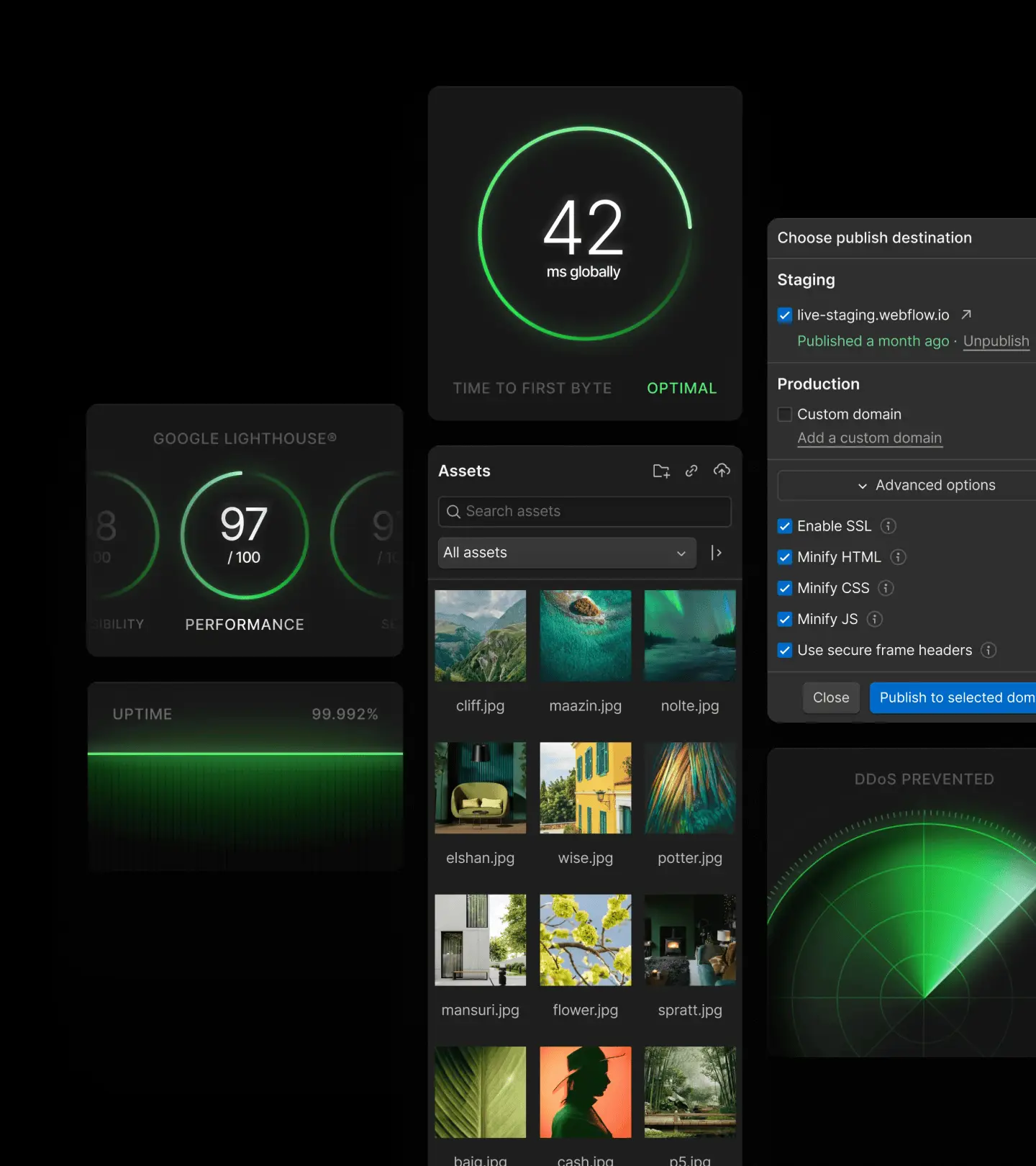
Production-ready by default
Built to perform
Pages ship optimized for Core Web Vitals. Fast loads, clean rendering, and a global CDN keep performance consistent worldwide.
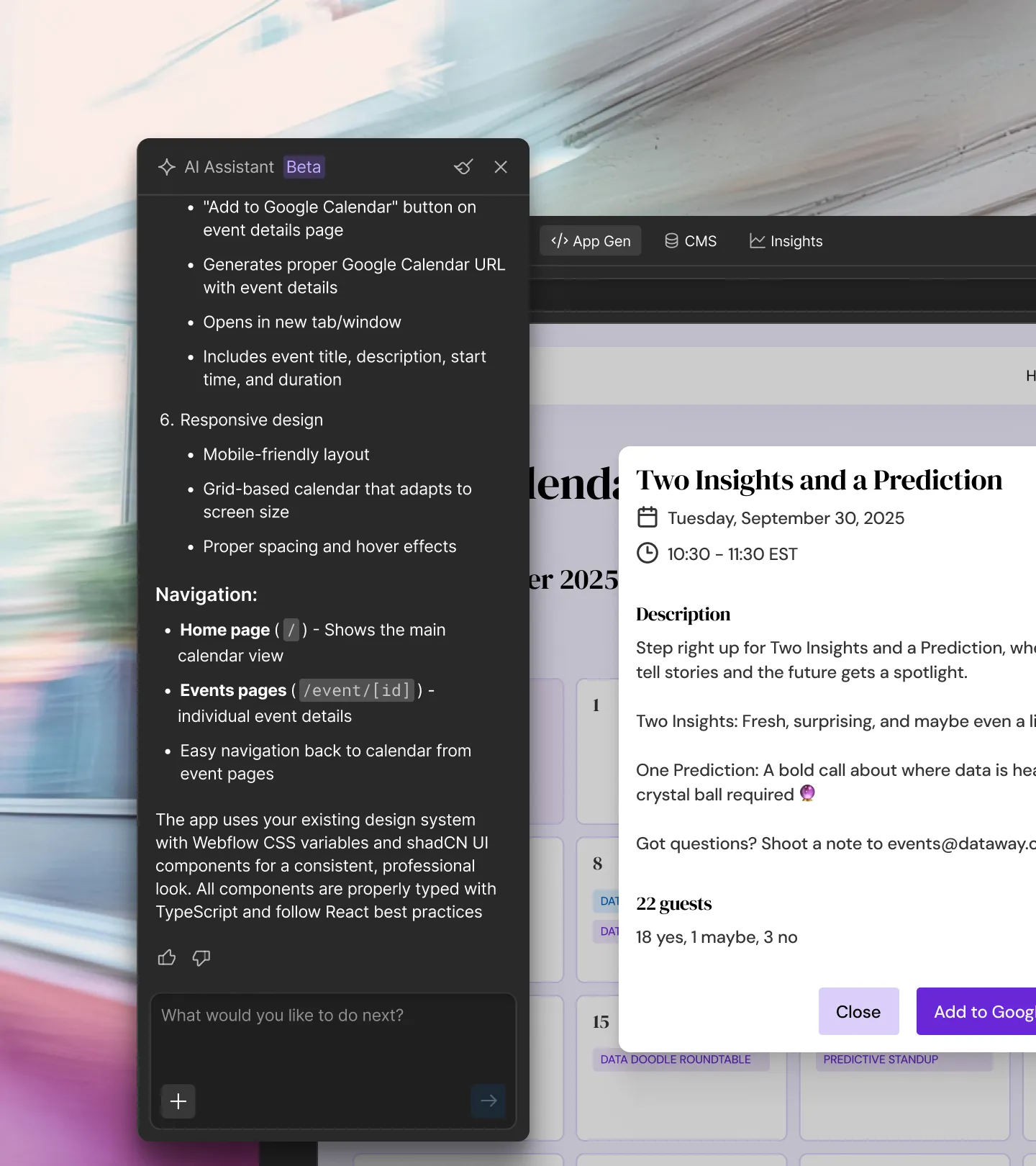
Embedded AI
Webflow’s AI Assistant helps with layouts and content in context. App Gen turns prompts into deployable web apps on Webflow Cloud.
Hosting handled
Every Webflow site runs on fully managed, Cloudflare- powered infrastructure, so you don’t have to stress about servers, pipelines, or uptime.
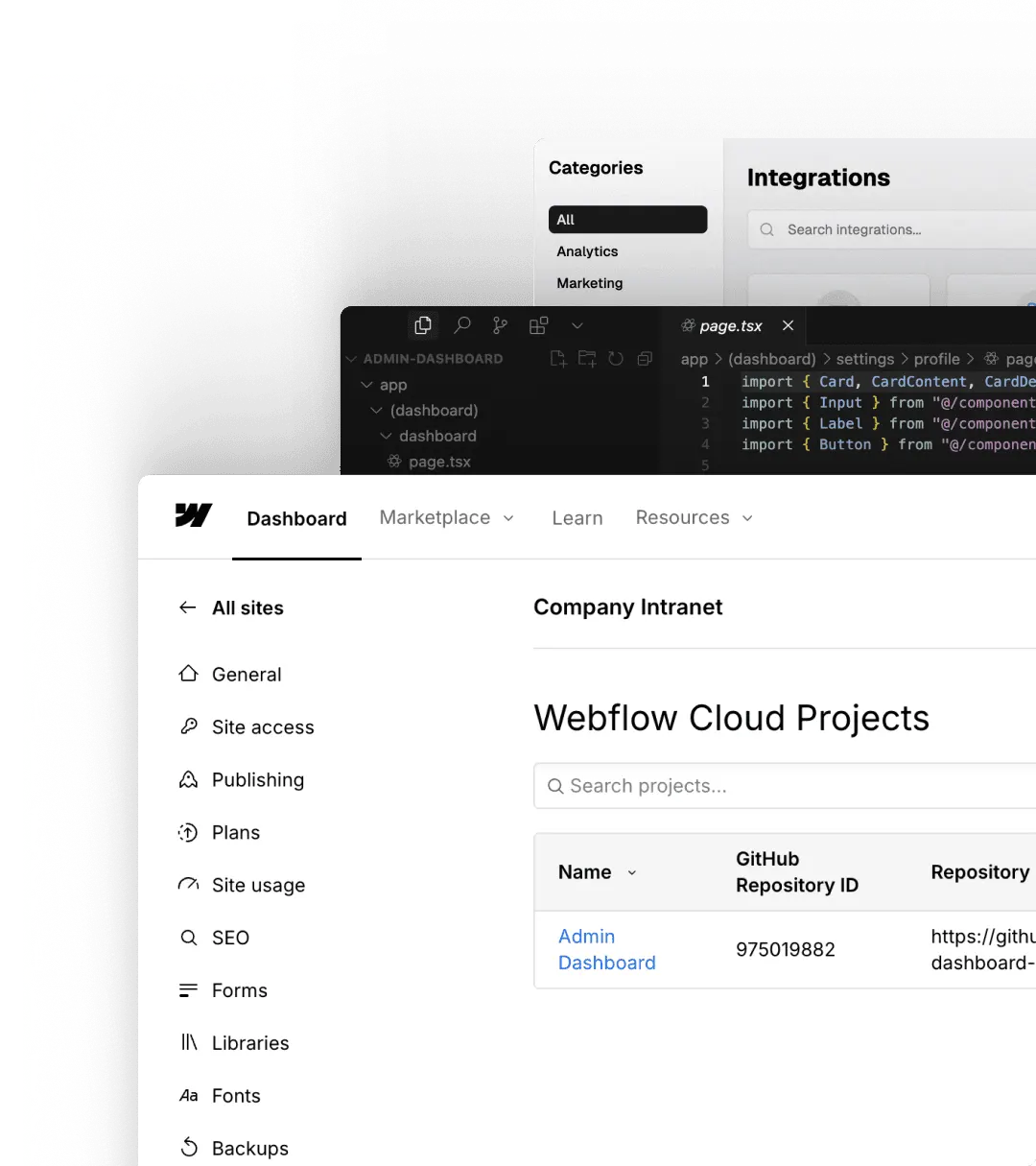
Extend what's possible with Webflow

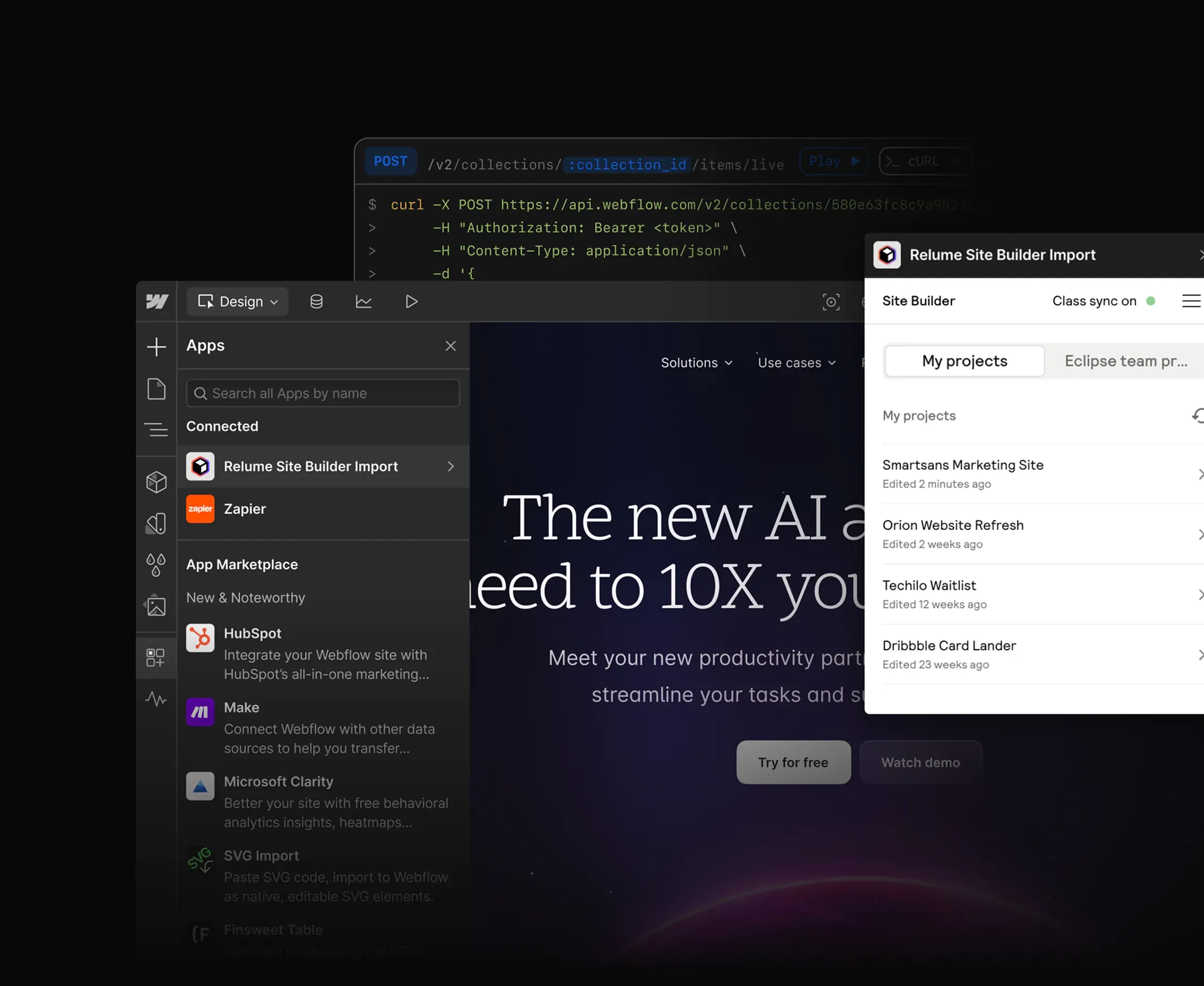
Connect your whole tech stack
Integrate tools for analytics, CRM, ecommerce, and automation from Webflow Marketplace directly into your site for streamlined management.

Deploy full-stack experiences
Deploy backend code, APIs, and React components alongside your site. Keep existing CLI and GitHub workflows while teammates publish visually.

Build & manage with MCP servers
Connect Webflow to your LLM, IDE, or agent platform for AI-assisted building, programmatic content management, and safe CMS migration.
Top integrations for developers

Connect to GitHub
Work locally or from your repo with Webflow CLI–managed version control and deploys.

Import from Figma
Turn design files into structured layouts that stay consistent as you scale.

Use your frameworks
Keep building with frameworks you already use: Webflow fits into your workflow.

Automate your workflows
Sync data, payments, and commerce through secure APIs and automation tools.
Webflow for developers
Build, integrate, and deploy secure full-stack applications that power your business.
How engineering leads use Webflow
If you’re spending time rebuilding designs or patching updates, your engineering lead probably feels it, too. Show them how Webflow helps teams move faster without adding new overhead.

Frequently asked questions
Yes, Webflow Cloud provides a serverless hosting and deployment platform that seamlessly integrates with GitHub, enabling developers to deploy full-stack web applications using modern frameworks like Next.js and Astro directly to Webflow sites. This integration eliminates the need for separate hosting services or complex DNS configuration, allowing teams to maintain their existing development workflows while leveraging Webflow's visual development capabilities.
Webflow’s platform supports multiple deployment environments (production, staging, development) and works in conjunction with DevLink to ensure consistent design implementation across your codebase. This approach gives engineering teams the flexibility to use their preferred frameworks and tools while benefiting from Webflow's streamlined deployment process and built-in performance optimization.
Webflow stands apart from traditional CMS platforms and website builders by providing engineering teams with clean, semantic code output and professional-grade development capabilities without the limitations of template-based systems. Unlike platforms that restrict customization or require extensive plugin management, Webflow offers the flexibility of custom development with the efficiency of visual tools, enabling teams to build exactly what they envision without compromise.
For engineering teams, Webflow combines the content management capabilities of enterprise platforms with the development flexibility typically reserved for custom-coded solutions. This unique approach allows developers to maintain full control over their codebase while accelerating delivery timelines, making it an ideal solution for teams that need both creative freedom and technical precision in their web development projects.
Webflow streamlines the design-to-development handoff by allowing teams to build directly in the browser, eliminating the traditional friction points between design files and production code. With DevLink, developers can bring Webflow components directly into their React codebase, ensuring design consistency while maintaining the flexibility to integrate with existing development workflows and frameworks.
The platform transforms the typical handoff process by enabling designers to create production-ready layouts that developers can enhance with custom functionality, rather than rebuilding from scratch. This approach reduces miscommunication, accelerates time-to-market, and ensures that the final product matches the original design vision while meeting technical requirements.
Yes, Webflow is designed to empower developers and engineering teams by bridging the gap between design and development, enabling faster delivery of professional-grade websites without sacrificing code quality or flexibility. The platform provides developers with clean, semantic code output while offering visual development tools that accelerate the build process, allowing teams to focus on complex technical challenges rather than repetitive frontend tasks.
Webflow gives engineering teams the ability to maintain full control over their development workflow while collaborating seamlessly with designers and marketers. By providing both visual development capabilities and the option to export production-ready code, Webflow enables developers to work more efficiently, reduce technical debt, and deliver high-performing websites that meet modern web standards.
Get started for free