






Your AEO Assessment: microsoft.com
Overall AEO Maturity score: 2 out of 5






Your top 3 priorities
Here's where microsoft.com can make the fastest gains in AEO visibility, accuracy, and traffic. If you only did three things, do these:
Expand your content library: with only 2 content pages detected, publishing additional blog posts, guides, and resource pages covering core topics will significantly boost visibility to AI answer e...
Complete key page SEO metadata: your most important pages are at 76.5% metadata coverage, just shy of the 80% target. Ensure every key page has a unique title tag, meta description, and canonical u...
Adopt an AEO monitoring tool: platforms like profound, otterly, or scrunch can systematically track AI citation rates, LLM brand mentions, and AI-referred traffic — capabilities essential for measu...
What your AEO Assessment covers
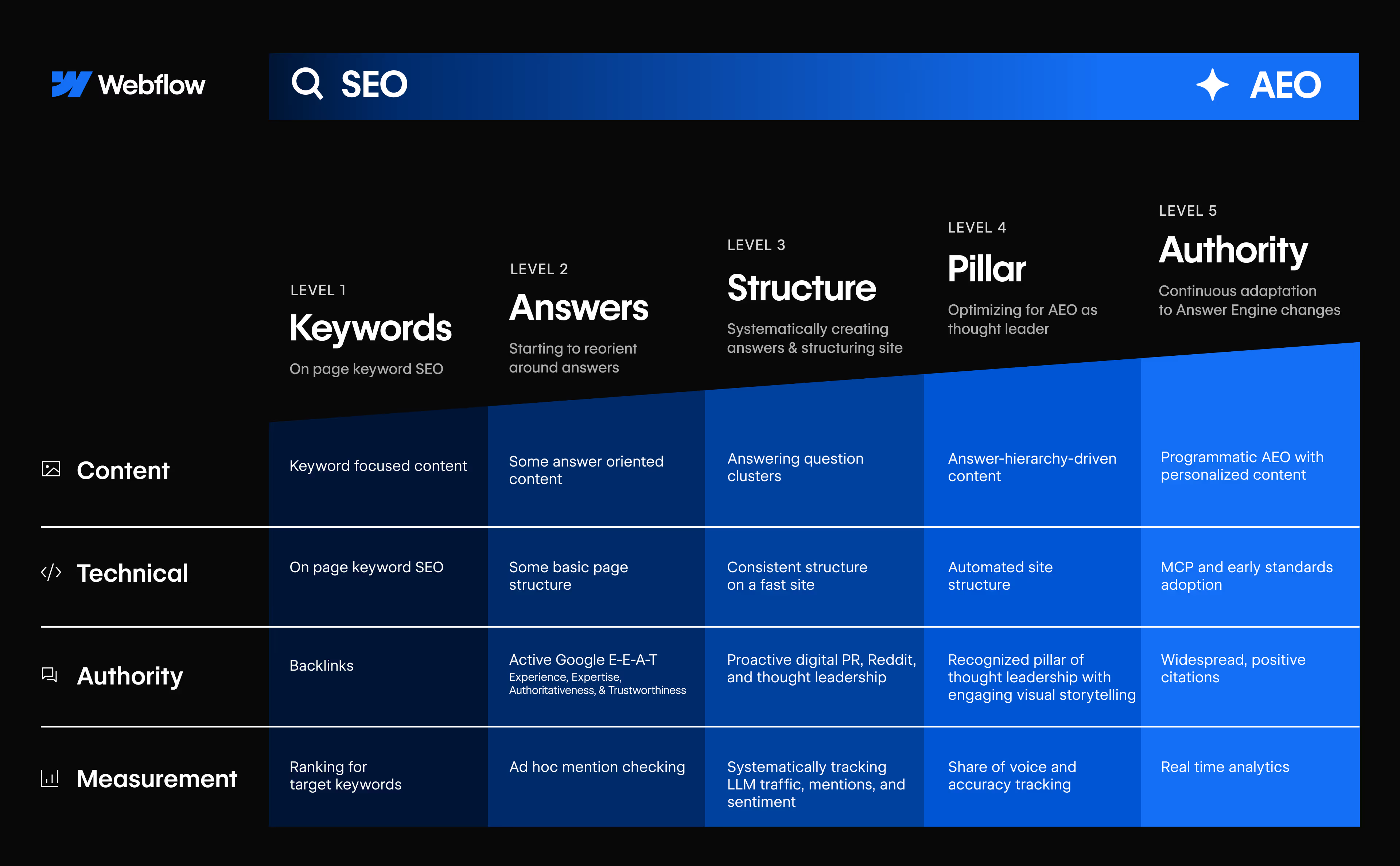
Your personalized AEO assessment measures how well microsoft.com is positioned for AI-driven discovery. It evaluates your site’s performance across four key categories—Content, Technical, Authority, and Measurement—to show how effectively AI systems can understand, cite, and recommend your brand.

Content
Content: Build the source AI trusts
We evaluated how your content performs across freshness, structure, depth, and clarity to see how well it helps AI understand what you do and why you matter.
Content Category Score
Microsoft has strong FAQ coverage across its pages and diverse content types in place. The main opportunity is expanding dedicated content pages—blogs, guides, and resources—to build a deeper content library that AI engines can surface for prospect questions.
Expand your content library
With only 2 content pages detected, publishing additional blog posts, guides, and resource pages covering your core topics will significantly boost your visibility to AI answer engines. Aim for at ...
Answer key prospect questions
Currently only about 8% of likely prospect questions are addressed in your content. Create targeted pages that directly answer high-intent questions prospects ask when evaluating solutions in your ...
Deepen FAQ strategy further
You already have FAQ sections on over 50% of pages—great work. To maximize impact, ensure each FAQ addresses 3-5 questions specific to that page's topic, covering product, pricing, and feature nuan...
Question Coverage Percentage
Coverage of the 100 most likely questions your target audience will ask related to the topics visible on your site.

Technical
Technical: Structure wins
We evaluated how well your site uses schema, other metadata, accessibility, and speed, and more to help LLMs understand the structure and meaning of your content and establish one part of your authority in AI-driven search.
Technical Category Score
Microsoft has strong foundational elements in place—HTTPS enforcement, robots.txt, and schema markup on key pages. The primary opportunity is closing small gaps in SEO metadata coverage and reducing layout shifts to unlock the next level of technical maturity.
Complete key page SEO metadata
Your most important pages are at 76.5% metadata coverage, just shy of the 80% target. Ensure every key page—homepage, product, pricing, about, and FAQ—has a unique title tag, meta description, and ...
Expand site-wide metadata coverage
Overall metadata coverage is at 66.7%, just below the 70% threshold. Leverage CMS templates to auto-populate title tags, meta descriptions, and H1 headings across all pages to close this gap effici...
Reduce desktop layout shifts
Desktop Cumulative Layout Shift (CLS) is currently 0.45, nearly double the 0.25 target. Reserve explicit dimensions for images and ads, and avoid inserting content above existing elements to stabil...
Schema Coverage Percentage
Share of pages with schema.org metadata for improved LLM and search engine understanding.

Authority
Authority: Earn trust, everywhere
We evaluated how your site establishes authority by looking at how and how frequently others talk about you, the associated sentiment, and more.
Authority Category Score
Microsoft has a strong digital foundation with a Knowledge Graph presence, Wikipedia page, and broad social media footprint. Key opportunities include adding author bylines to content and ensuring contact information is easily discoverable to strengthen trust signals.
Add author bylines to content
Attribute blog posts, articles, and guides to named authors with credentials. Author bylines signal human expertise and boost authority scoring in both search engines (E-E-A-T) and LLM evaluations.
Make contact info easily findable
Ensure a dedicated Contact page with clear contact details is discoverable by users and AI systems. This is a foundational trust signal that both search engines and LLMs use to validate legitimacy.
Scale author attribution across content
Expand author bylines to at least 25% of content pages, including author bios with credentials and linked profiles. Adding Person schema markup gives LLMs structured authorship data to reference.
Authority Coverage Percentage
Percent of top 50 industry sites that mention you.

Measurement
Measurement: From rankings to representation
This score reflects how well you monitor your visibility across AI systems; from tracking brand mentions and citations to understanding sentiment and share of voice.
Measurement Category Score
Microsoft has a strong digital foundation with a Knowledge Graph presence, Wikipedia page, and broad social media footprint. Key opportunities include adding author bylines to content and ensuring contact information is easily discoverable to strengthen trust signals.
Add author bylines to content
Attribute blog posts, articles, and guides to named authors with credentials. Author bylines signal human expertise and boost authority scoring in both search engines (E-E-A-T) and LLM evaluations.
Make contact info easily findable
Ensure a dedicated Contact page with clear contact details is discoverable by users and AI systems. This is a foundational trust signal that both search engines and LLMs use to validate legitimacy.
Scale author attribution across content
Expand author bylines to at least 25% of content pages, including author bios with credentials and linked profiles. Adding Person schema markup gives LLMs structured authorship data to reference.


Measurement Coverage
Presence of externally visible signs on your website that you are using measurement tools.