


Some people discover Webflow, build a site, and move on.
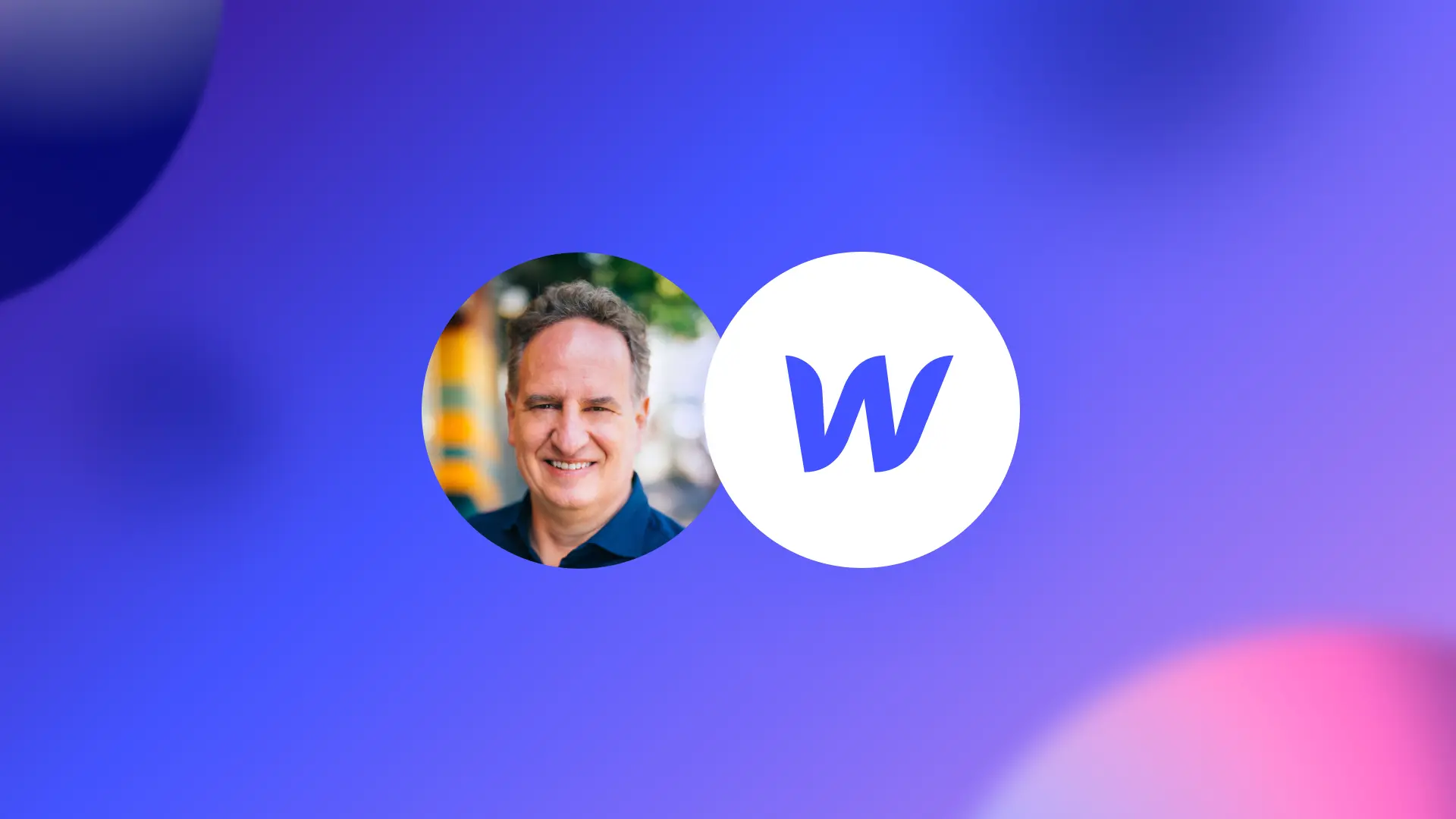
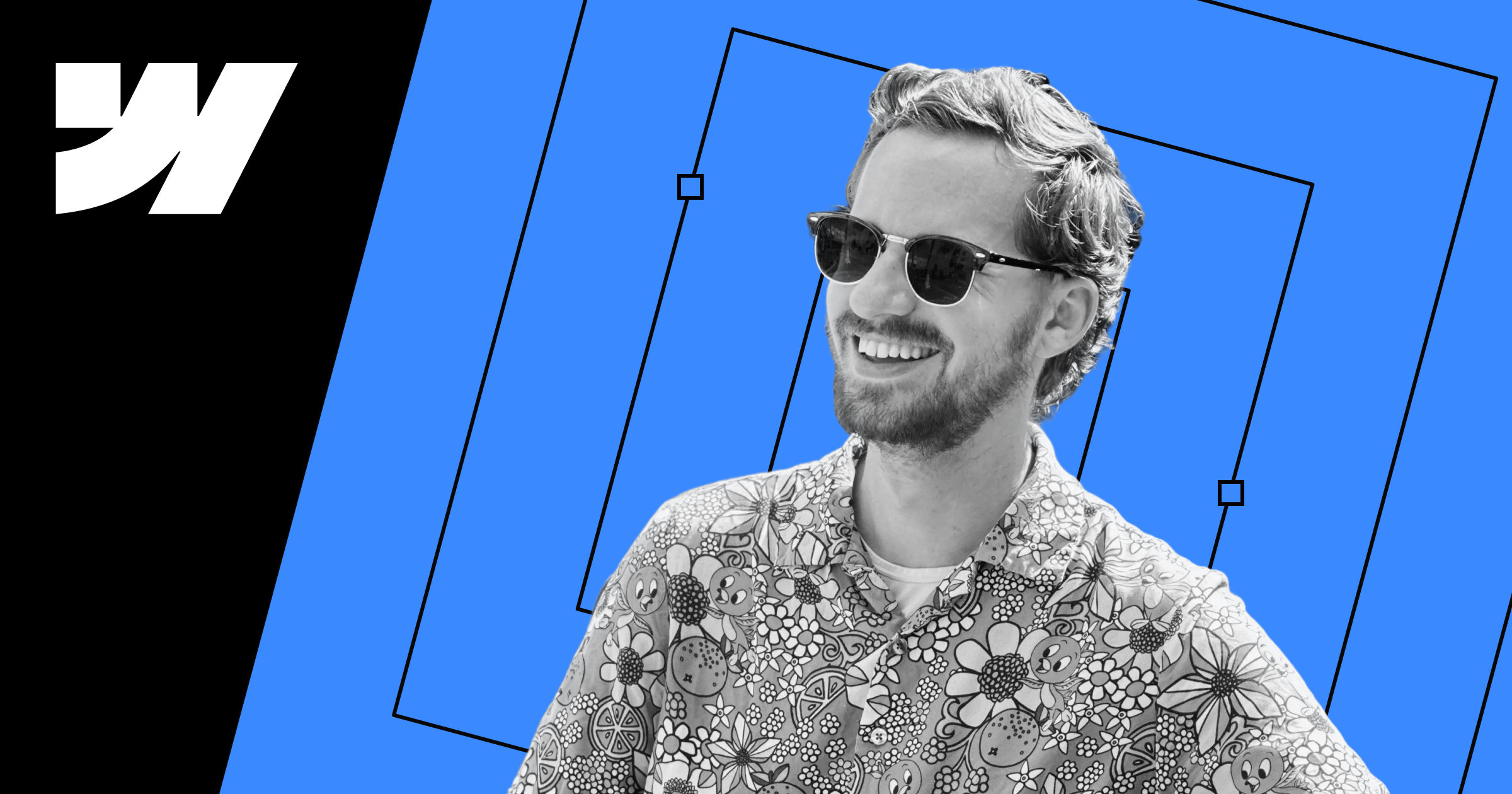
Jon Saxton discovered Webflow, built a personal site, and accidentally kicked off a decades-long career transformation. From project manager to freelancer to full-time developer — and eventually a Webflow community member and Certified Partner — he’s now joined us as a Senior Solutions Architect.
It’s a full-circle moment: he learned Webflow, built a career with it, and now helps top brands build on the platform while shaping its future from the inside.
We sat down with Jon to talk about the spark that started it all, the builders who helped him grow, and what it feels like to join the company he’s been orbiting for years.
He calls it “joining the mothership.” We call it welcoming home one of our own.
The first spark: a personal website and a magic moment.
When did you first get interested in web development?
Jon: Well, in middle school, I copied and pasted my science teacher’s website into MS Word and thought I was hacking it. There wasn’t even a stylesheet — everything was tables and inline styles — so the Word doc looked exactly like the site. I was basically practicing visual development six years before Webflow was founded.
How did you first stumble onto Webflow, and what hooked you?
Early in my career, I thought having a personal website on my own domain would be the coolest thing ever. I found Webflow, put together something super basic, pressed publish… and suddenly, it was live on the internet for anyone to see. That simplicity was a magical moment. And it set everything in motion.
What were you doing at that point in your career that made building with Webflow feel like the right next step?
In a previous life, I was a project manager working with creative agencies, so I had the pleasure of working around a lot of creative people and on a lot of creative kinds of projects. While there's certainly some creativity in the management of those projects, I wanted to have an outlet to express myself and learn things about creating on the internet myself. Webflow gave me that.
From curiosity to side gig to full-time developer
What was your driving force to becoming a developer?
Honestly, it was how fast I could learn just by doing. That’s something I think is so cool about development in general. But particularly with Webflow, you can iterate and try new things so rapidly that you end up learning very quickly. Every small project nudged me forward.
Also, the Webflow community is an absolute gem. I don't think I would be nearly as far in my development career without the support, advice, discussion, and community with other Webflow developers. They accelerated everything.
Do you remember your first “oh wow, I can actually make a career out of this” moment?
Oh yeah. I had just bought my first house and needed a door replaced. The company I hired had a website that was down. When the estimator came, I mentioned it, and they said, “Yeah, we know… we just don’t know what to do about it.” So I said, “Well, I might be able to help.”
That project paid for more than the door. And I loved getting to build for a company in my local community and help them reach new customers.
What’s something you learned the hard way when shifting from PM to developer?
As a project manager, I used to think the buck stopped with me. Then I became a developer and realized,“Yep, the buck stops here, too.” Every plan, strategy, and design decision eventually lands in the developer’s lap to figure out.
I was fortunate to work on teams where engineering was pulled in early, so we had a voice in shaping the project. But when we weren’t — or I didn’t speak up — I felt the impact. That was a big lesson for me: developers can shape the solution just as much as planning does.
Building in the Webflow ecosystem
You’ve worked with agencies, marketers, and brand teams. What do you think Webflow enables that’s hard to get elsewhere?
I kept seeing the same thing: there’s a paradigm to visual development that Webflow really leads. There’s this inherent simplicity — a layer of abstraction that makes things easier to work with — sitting in front of a ton of incredibly smart systems you never have to see or think about. Even the fact that you can hit one button and publish everywhere is huge. Behind the scenes, that replaces an entire compile-build-deploy pipeline.
And because the whole thing is visual, non-technical teammates can finally jump in and manage things themselves, often at a level of speed they’re not used to with legacy systems.
“Joining the Mothership”
You joked that joining Webflow feels like joining the mothership. When did you first know you wanted to make it official?
Since my early days going through Webflow University and getting a first taste of Webflow’s culture through the lessons, I’ve always had my eye on Webflow as a dream place to work. I’ve loved the product for years, and I’ve loved getting to know team members on social media and in the community at large.
This year was my first Webflow Conf, and that’s when everything clicked. I met so many people I’d interacted with online, and so many I hadn’t — folks who worked behind the scenes on the features and launches that have shaped the way I’ve worked for nearly a decade. And every single one of them is just an awesome human.
That’s when it really solidified something for me: this isn’t just a product I love. There’s a team behind it that I genuinely respect and that I want to be part of.
Life, family, and finding the right way to work
How has your life shaped the way you approach work?
When I had my first kid, I was still working in an office. I’d get home from my commute around 6PM just to jump straight into the bedtime routine at 6:30. I eventually went remote to get that time back with my family.
When my second child was born, I moved full-time into development because I wanted an environment and a lifestyle that let me be more involved and present at home.
I get a similar lifestyle working here, and what I really appreciate about Webflow is that remote isn’t treated as an add-on. It isn’t just remote-friendly; it’s intentionally remote-first. That creates a culture that supports the way I want to show up both as a parent and as a teammate. It’s exactly where I need to be right now.
Jon’s next act: Senior Solutions Architect
What about the role of Senior Solutions Architect felt like the right next step in your Webflow evolution?
For me, the best part of development has always been solving problems. Sure, sometimes that’s tackling technical front-end challenges, but I really love talking with designers, marketers and client leaders, doing the planning, figuring out how to make something work, or reimagining what’s possible. That’s exactly what a Solutions Architect does.
I love building, but honestly, the mix of listening, technical problem-solving, planning, and guiding teams is where I really come alive.
What excites you most about partnering with enterprises from the inside?
Helping them see what’s possible — and then helping them get there faster.
How does being a longtime Webflow user shape your approach to your new role?
I’ve seen the same challenges pop up across so many projects and organizations for 10 years now. I have a lot of experience to draw on and say, “Here’s what I’ve seen work elsewhere,” while also recognizing that every project brings something new.
The land of web and development is vast and there’s always something new to learn, a novel way to approach something, or ways to do it better. And as my colleague Blake Lam says, “Everything is figure-outable.”
What do you want customers, freelancers, and agencies to know about what’s happening inside Webflow?
The level of thought and care that's put into decisions and prioritization — on everything from the product to the community to customers to partners — is incredible.
If you could wave a magic wand, what problem would you love to solve for customers?
I want people to feel empowered. Modern websites require so many hands and skillsets, and outcomes are always better when the people who need to work on them have fewer barriers.
Looking ahead
What gets you fired up about the next decade of Webflow?
Webflow has always been about lowering barriers to action. Visual development is one path to that. AI is another. Webflow is so well-positioned to bring that power to customers.
When I look back many years from now, I hope I can say, “I worked with amazing people, and I got to play a part in a rising tide that lifts so many ships.”
A full-circle moment, shaped by community
Jon’s journey echoes the path many Webflow builders take: discovering a spark, learning fast, finding opportunity, and building a career with Webflow at the center of it.
Now, he’s helping shape the platform that shaped his work.
If you’re somewhere earlier in that journey, Jon’s advice is simple: “Have an open mind. Be curious. Put yourself out there. Provide value. Invest in relationships.”
Everything else? Well — it’s figure-outable.

















If Jon’s story feels familiar, your next chapter might start here. Join a team that’s building the future of the web, and the careers that grow with it.

Join our team
Ready to help shape the future of the web? Let’s build it together.