



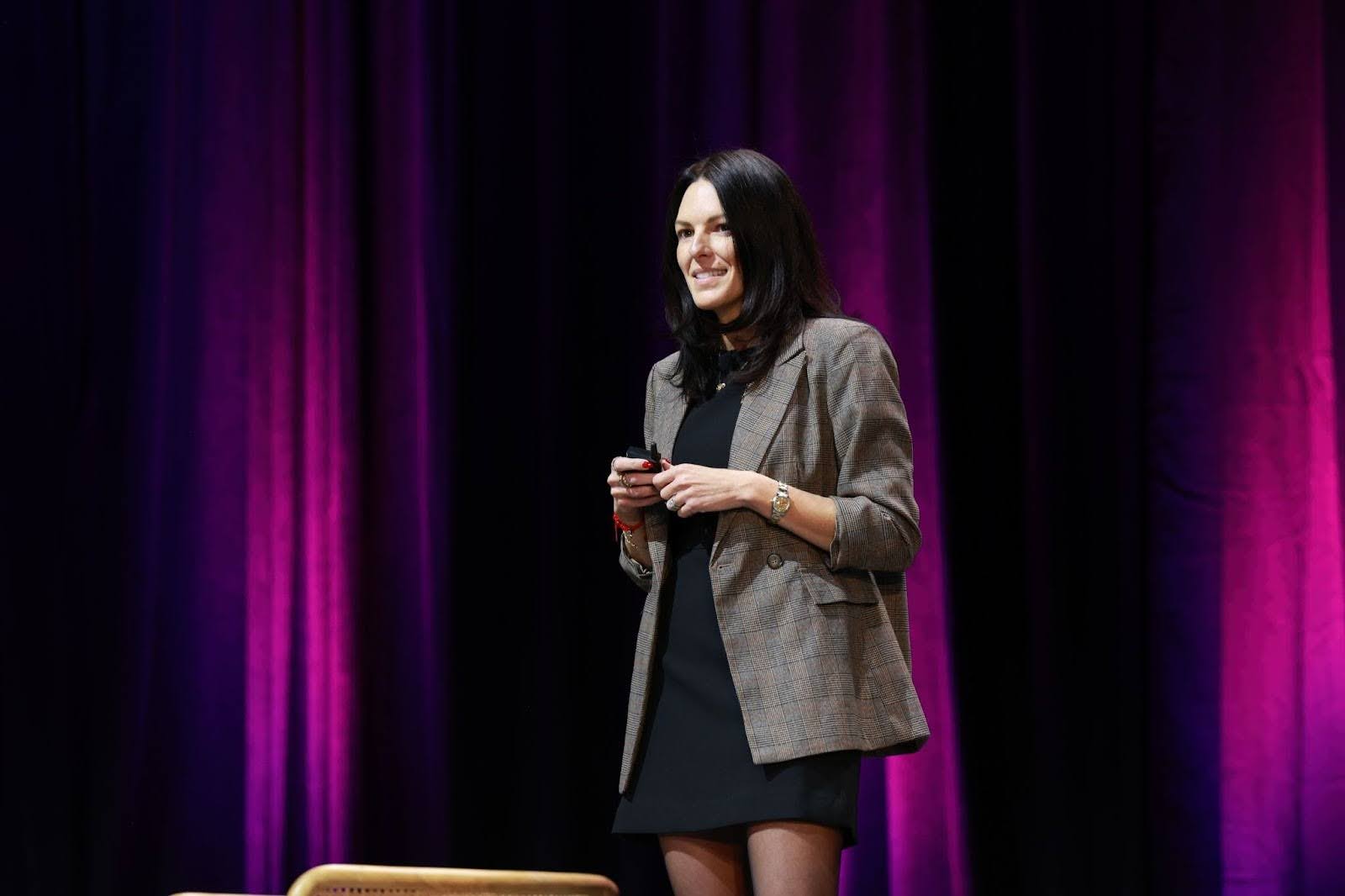
Tara Murray doesn’t want Webflow to be considered a hidden gem.
“We've spent years being the best-kept secret in enterprise marketing. That era is over,” the company’s vice president of revenue operations said.
Since its founding in 2013, Webflow’s platform has enabled countless designers, marketers and developers to build, manage, and scale code-free web experiences, serving as a behind-the-scenes source of support. But Murray no longer wants the platform to be teams’ hidden superpower.
That’s where Webflow’s sales team comes in. As the company shifts from being a leading no-code visual website builder to an AI-native web marketing platform that Enterprises rely on, Murray said the sales org is evolving as well. In addition to amassing over 300 team members, the sales org has expanded into other regions, experimented with verticalized and named-account strategies, broadened its tech stack and more.
As AI changes how people search and discover brands, Murray said Webflow is in the perfect position to help organizations thrive. Those who join the company’s sales org get to drive this mission forward while being empowered by a culture of independence, creativity and passion.
“We're at an inflection point — the product is ready, the market is shifting, and the org is built to win. Come make your mark,” Murray said.
Below, Murray shares more about what it’s like to work in Webflow’s sales org and what she’s excited to accomplish next.
How Webflow’s sales organization has evolved to support modern enterprise customers
Tell us about your role, your team and what your day-to-day work looks like.
I’m Tara Murray, and I lead revenue operations and sales development at Webflow. I’ve been here for just over five years.
My scope is broad. I oversee marketing ops, sales ops, customer success ops, partnership ops, go-to-market strategy, enablement and sales development. So, my team covers everything from back-end systems and process automation to internal go-to-market AI initiatives to annual planning, enabling the field and ultimately driving pipeline and revenue.
In terms of size, the ops and enablement org is just under 30 people today, and sales development, including individual contributors and leadership, is around 50. At the end of the day, our job is to make sure the engine runs well and that the people running it are set up to do their best work.
You’ve been at Webflow for over five years. What did the sales team look like when you joined?
When I joined, there were about 10 of us total across all of sales. And yes, it really was two account executives, a couple of sales engineers, a sales development representative, some post-sales roles and a few others. That’s it. It was a true startup.
At the time, we had a self-serve product and ambitions to move upmarket, but we were very much figuring it out. We were experimenting with messaging, testing pricing, trying to understand what larger companies were doing with Webflow and whether there was a real enterprise motion worth investing in.
And there was. We've nearly 100x'd sales-led revenue since I started. That growth validated that this wasn't just an experiment; it was a motion worth investing in across product, sales, marketing, partnerships and post-sales.
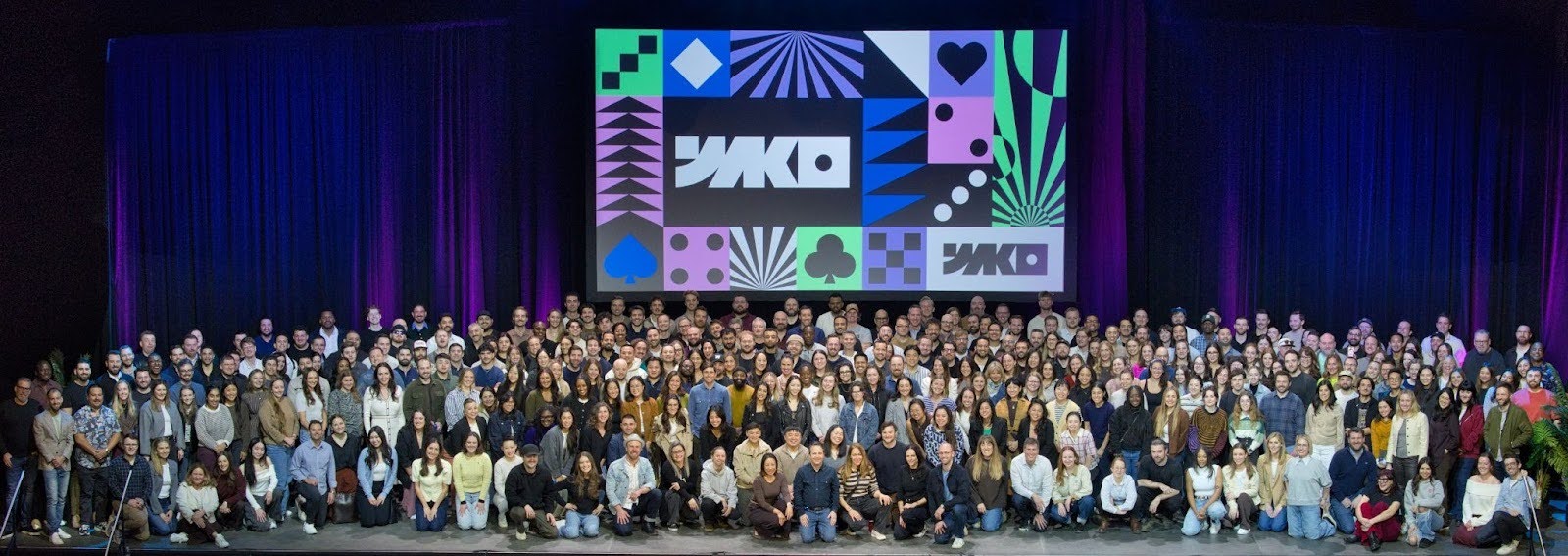
This was before vibe coding and LLMs, back when no-code was still a new idea. We were at the forefront of something, and we knew it. And now here we are, a global org of over 300 people.
How would you describe where the sales team is today? What’s changed structurally and technologically?
The biggest change is specialization. Early on, we had some people doing four jobs at once — demoing, onboarding, supporting customers and renewing them. Today, those are four distinct roles because the scale and complexity demand it.
We’re now structured by segment, geography and, increasingly, by motion. We’ve expanded into Europe, the Middle East and Africa. We’re experimenting with verticalized and named-account strategies. We’ve built a post-sales model that distinguishes between high-touch and scaled support. Our partnerships ecosystem has evolved dramatically, encompassing agencies, freelancers, systems integrators and technology partners, all with different needs and enablement paths.
Our tech stack has evolved significantly, and we’re very forward-leaning. We’re not afraid to invest in technology — especially AI — if it helps our teams move faster and focus on what humans are best at.
We maintain a strong foundation of enterprise platform solutions that you find at most companies, but on top of that, we’re constantly piloting, testing and iterating. Our AEs have a lot of freedom to experiment with tools and workflows and get creative, and operations steps in to scale what works. I don’t believe in locking things down so tightly that innovation dies.
Our AEs have a lot of freedom to experiment with tools and workflows and get creative, and operations steps in to scale what works
How Webflow’s sales team is leveraging AI to support modern marketing leaders
Webflow has been product-led and self-serve for years. What changed internally that made this the right moment to invest in more structured teams — and what does that shift say about where the company is headed?
Initially, we were validating whether the enterprise opportunity even existed. Once we started seeing the value customers were getting and what they were needing from us that they couldn't get on self-serve, things clicked. There was a big moment of “Wow, these really big companies want to build and partner with us. There’s something here.”
How people discover brands has fundamentally shifted. Answer engines are replacing search results. Bots are alongside humans as your audience. Enterprises are being forced to rethink how they build their web presence, how they reach people and how they integrate AI into their workflows, all at the same time. A business' website is the most valuable marketing asset they own. That means they need a platform they can trust. One with the security, governance, interoperability and reliability to support it. That's not a self-serve decision. That's an enterprise one.
Webflow isn’t just a site builder. It’s the operating system for modern marketing teams. And that’s an enterprise story, which requires a thoughtful, well-structured go-to-market org to support it. The market is shifting and we are at the forefront of that shift. AI is changing how brands get discovered, and we’re positioned to win.
Webflow is often called a “hidden gem.” Why is the work happening here worth paying attention to?
What makes us a hidden gem is that a lot of teams rely on Webflow quietly. It’s a marketing team and design org’s superpower. It’s deeply embedded in their workflows, so they’re not shouting about it — it just works. That’s likely why we fly under the radar.
Webflow has had a cult following in the design and development world since our early days, and now we’re expanding that recognition to a much broader market. But what people don’t always realize because of the perception of being self-serve first is how enterprise-grade Webflow already is. We have customers running billion-dollar businesses on the platform. We have the security, reliability, extensibility and trust that companies require.
This is one of those products that starts as a secret weapon and then becomes the standard. The same transition companies like Slack, Dropbox and Figma made — from beloved tool to a “mission-critical platform.” And that shift is happening at Webflow right now.


















What Webflow’s sales culture is like: Autonomy, creativity, and work-life balance
How would you describe the culture as the sales org scales?
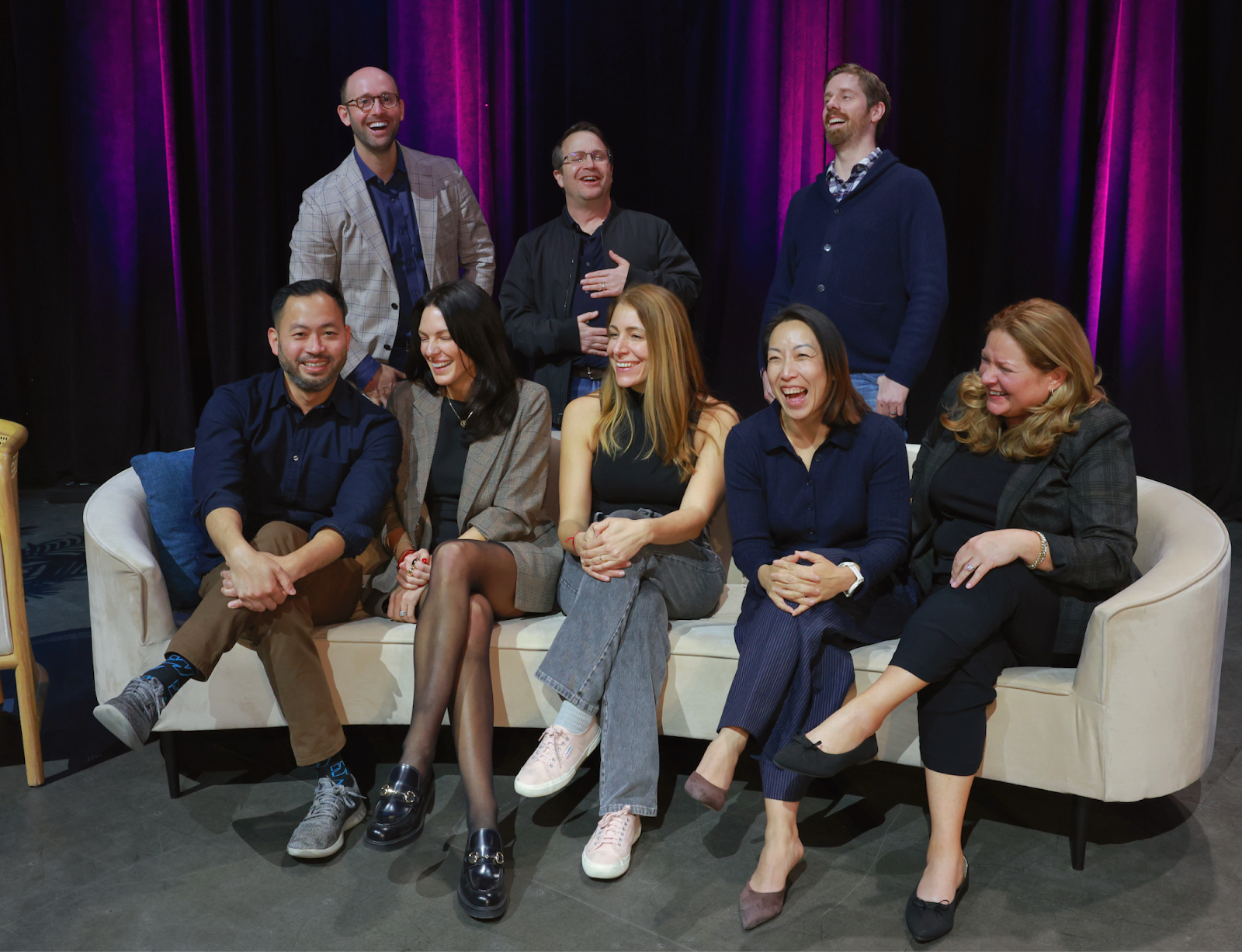
The sales culture here has been very consistent over my time here. If anything, it’s gotten stronger and bolstered as we’ve grown and added new personalities.
Like the broader Webflow company culture, we are deeply customer-focused. Every decision runs through a lens of: How does this impact the customer, the prospect or the partner? That’s true in ops, marketing, leadership, customer-facing roles and everywhere else.
We're competitive and we play to win — and we care just as much about each other. We root for each other. We show up for each other.
We don’t take ourselves too seriously either. Every deck seems to have memes or pop culture references. Costumes tend to play a significant role at team meetings, annual traditions and sales kick-offs. AI-generated images are flying around Slack. And ultimately, there’s a sense of humility. We’re building a business, so we shouldn’t lose ourselves in the process.
And there’s real respect for life outside work. Many of us are working parents, so school pick-ups and family blocks on calendars are non-negotiable. PTO is sacred. We work hard and move fast, but we're intentional about sustainability. At the end of the day we’re all human first, and we don’t lose sight of that.
At the end of the day we’re all human first, and we don’t lose sight of that.
Are there things Webflow’s sales org does differently than most teams?
Yes, especially in how much autonomy we give people. We provide strong structure and core processes, but we don’t micromanage creativity. If an AE sees something interesting on LinkedIn or hears a great idea on a podcast, we want them to try it, share it, and iterate on it. A tool they want to test? Let us know so we can try it. Unnecessary control kills innovation.
Of course there are controls in our business that are sacred — our sales process, how we forecast, book revenue or manage our customers. But the best ideas come from the frontline of what’s working and what’s not. If something isn’t working, we change it. Not everything is meant to grow with the business.
We also invest heavily in enablement, not just tooling. The goal isn’t to interrogate the pipeline — it’s to help people get better at selling, and those are skills they can take with them no matter where their career leads.
Who thrives at Webflow, and who struggles?
People who thrive here are adaptable, collaborative, curious and comfortable with change. They don’t wait to be told exactly what to do — they help build the “how.” It’s the people raising their hand and bringing their ideas to the team who grow quickly here, sharing what’s working and helping their peers do the same.
People who struggle are looking for a static handbook or want to sit back and have things happen to them. This isn’t a place to be a passive passenger.
Change is a constant here, and we move fast. We explain the why, we support our people through it — but we don't slow down. Because if we don’t evolve, we lose.
What Webflow’s future growth means for sales careers and internal mobility
What excites you most about the next 12–18 months?
Honestly, this is our moment. CMOs are under enormous pressure. Traffic is declining. Conversions are dipping. AI has changed how people search and discover brands. Boards are asking hard questions, and leaders are being asked to rethink everything, fast.
We’re one of the only companies truly helping teams navigate this shift — not just with tools, but with a platform and a point of view. We’re tackling answer engine optimization head-on, and customers need that right now.
It's rare to be at a company where the problem, the product and the moment all align. That's where we are. That’s incredibly energizing.
It's rare to be at a company where the problem, the product and the moment all align.
Is there anything we didn’t cover that you want a prospective candidate to know? What do you want to leave them with?
You'll get a front-row seat to how modern marketing is being rebuilt in real time. There's room to grow, move, specialize or lead — we're serious about internal mobility and long-term career development.
This is a place where you can do the best work of your career. If you're willing to take ownership and make your mark, there's a spot for you here.
This article was originally published on Built In.