










Success with programmatic SEO hinges on thorough planning, a robust template, and thoughtful keyword research.
Programmatic search engine optimization (SEO) generates dozens — even hundreds — of individual landing pages targeting different keywords and search intents to attract an influx of new traffic. Execution requires extensive planning and research to ensure you’re targeting the right long-tail keywords and serving them effectively.
A scalable SEO strategy thrives on the balance of specificity and a wide reach, which isn’t always easy to achieve. This guide explores how programmatic SEO and landing page generation works, breaking down the benefits, challenges, and best practices.
How programmatic SEO works
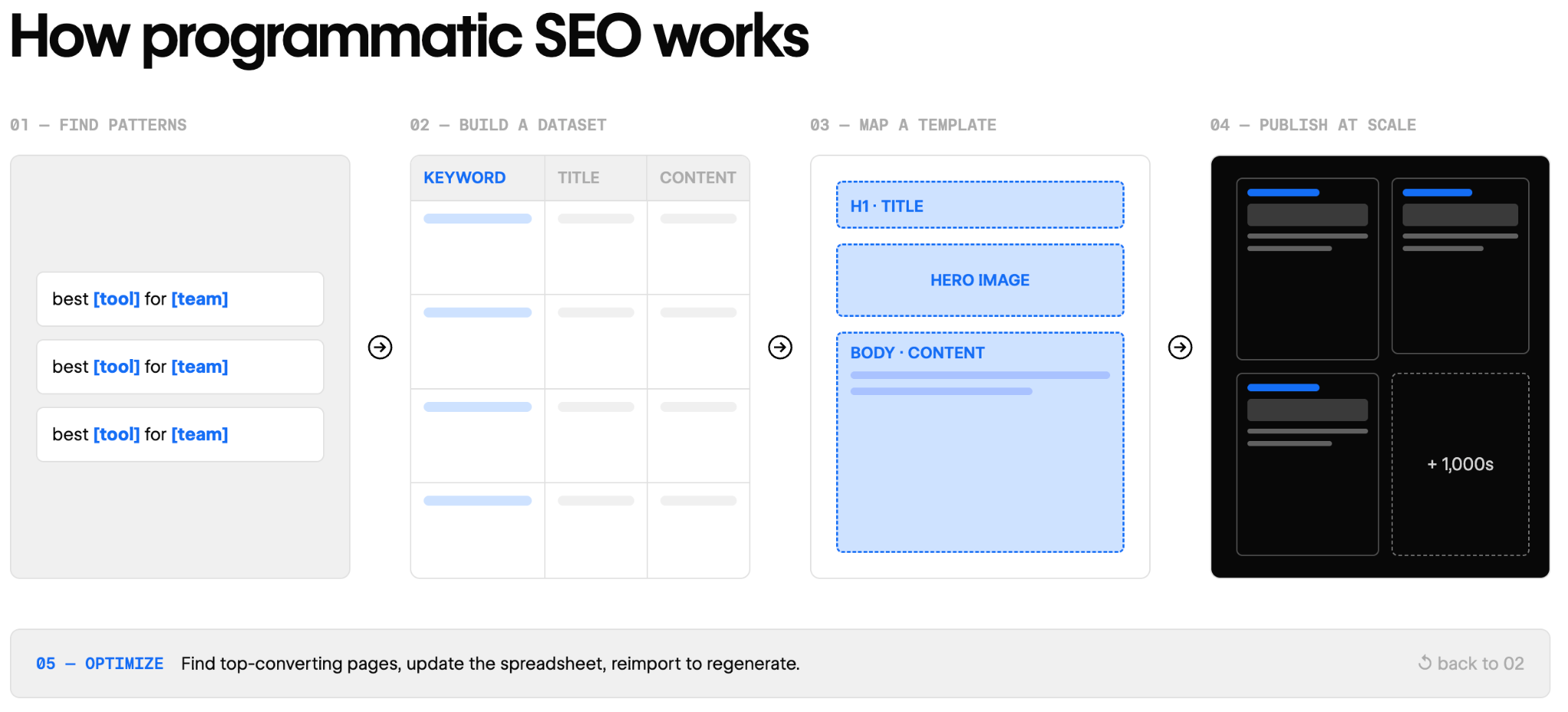
Programmatic SEO involves collecting your target keywords, formatting them into structured data, and feeding that data into a dynamic template for building targeted SEO pages. You’ll also need keyword-specific content and data to populate each template, just as you would with traditional SEO.
Identify scalable keyword patterns
The first step is to use SEO research tools to identify the right keywords and the search intent behind them. A long-tail keyword strategy is valuable because more specific queries often signal a clear need or intent to take action, even if individual phrases attract relatively little search volume. Prioritize relevant terms with repeatable patterns:
- How to [accomplish marketing task] with [platform]. ‘How to do content marketing with Webflow CMS,’ for example.
- [Adjective] [product category] for [audience]. ‘Affordable website builder for small businesses,’ for example.
These programmatic SEO examples follow a repeatable structure with variables you can adapt for relevant audiences, use cases, or offerings. Before generating pages, validate that each keyword variation reflects genuine search demand and distinct intent.
Build a structured dataset
Begin with a spreadsheet using one row for each planned landing page and seven columns:
- Primary keyword
- URL slug
- Title tag
- H1 heading
- Meta description
- Target audience or use case
- Unique page copy
Add one validated target keyword phrase per row, then write the metadata and heading to match each specific search query. If you’re using the Webflow CMS or an automation platform like Zapier, map these columns to the corresponding CMS fields to efficiently populate your template.
Use the unique page copy column to explain how your product or service addresses each audience’s specific needs. If you’re building programmatic SEO pages for all of your services’ use cases, for example, write at least one paragraph explaining how each service applies to each use case instead of swapping keywords into otherwise identical copy.
The more information you populate into this spreadsheet now, the more dynamic your pages will be, so take the time to do it right. You can add columns for specifying components to include on each page, too, such as feature highlights or awards. You can also designate which assets you want each page to use, like different hero images or demo videos.
Create dynamic page templates
Create one (or more) dynamic templates that pull information from your spreadsheet. Map each layout section to the title tag, meta description, content, and other fields specified in your spreadsheet. Every row will become its own page; the H1 becomes the title while the content goes into a body text block, and everything else populates based on the components you list and assets you link to.
Publish and optimize at scale
Preview a handful of pages to make sure everything populates correctly. If they look good, publishing can continue at scale. Generating landing pages this way may take a few moments as your website builder pulls in content, places it where it belongs, and loads each new page onto your site.
If everything still looks right, then it’s time to wait. Give your programmatic SEO pages time to begin drawing in search engine crawlers and readers searching your target keywords. You can use a tool like Webflow Analyze to get real-time data about how they’re performing. When you have enough information to make decisions about what’s working and what isn’t, then you can begin optimizing.
Identify pages that are outperforming others in conversions (not traffic) and figure out what’s unique about them. Consider using certain images, assets, or components from those pages more broadly across others. Just update the reference in your spreadsheet to the better variable, then reimport to regenerate the pages.

SEO and Webflow: the essential guide
Get 13 need-to know tips on website SEO — whether or not you use Webflow.
Benefits of programmatic SEO
Implementing scalable and forward-looking programmatic SEO requires some behind-the-scenes setup, but can deliver clear and impactful benefits.
Capture long-tail search demand
Long-tail keywords match niche search intents that typically remain evergreen. Normally, capturing search volume from long-tail keyword phrases requires manually crafting dozens of landing pages. Programmatic SEO automates the process and helps you cast a wide net for specific intents.
Scale content production efficiently
When you don’t have to make every new page from scratch, the pipeline from keyword research to published landing pages becomes much more seamless. If you need more SEO pages to cover new and emerging topics, just add more rows to your structured data or new items to your Webflow CMS collection. Then publish, monitor analytics, and optimize over time.
Create highly targeted landing pages
Programmatic SEO requires little manual effort to create highly targeted pages. Each new page comes from one row in a spreadsheet, and you can add new rows much faster than you can manually create dedicated pages. That simplicity means addressing more possible use cases and search intents in less time.
Risks and challenges of programmatic SEO
Search engines like Google rank your pages based on how useful they are to users searching your target keywords.
Here are some common mistakes to avoid:
- Thin content. Your pages can’t just be programmatic advertisements; they need to offer enough content to genuinely address the reader’s query in an original and useful way.
- Over-reliance on AI. Too much AI-written content makes your copy sound stiff, clinical, and unrelatable to your target audience.
- Poor keyword research. Your keyword research is the starting point for the rest of your SEO strategy. Choose long-tail keywords with clear search intent for your target audience.
- Maintenance at scale. Don’t neglect your technical SEO. Maintain your spreadsheet, asset library, and documentation to ensure that every page, new and old, is up to date and accurate with no errors or broken links.
- Poor mobile experience. Your pages might fall short on mobile SEO if you only design templates for a desktop experience.
Programmatic SEO best practices
If you can avoid the most significant risks and challenges, your programmatic SEO strategy is already off to a great start. To really make the most of it, follow these best practices.
Prioritize unique value
Every new page should offer a novel take on the target keyword and be different enough from the competition to justify its existence.
Match search intent
Programmatic SEO pages shouldn’t use boilerplate language for a wide audience. You don’t have to write a lot of content, but what you do include must match the reader’s intent. Write content that speaks to their pain points and frustrations, and show how your service addresses them specifically.
Build scalable content models
Build variables, classes, and reusable components you can mix and match to quickly create new high-quality pages. And add internal links that keep visitors on your site and show search engines you’re an expert on related topics. Linking these pages together creates a cohesive content structure, helping visitors discover related information while giving search engines clearer context about how your pages relate to one another. The unique variables and page-specific content let each page serve a distinct search intent and create a user-centric experience.
Continuously monitor performance
Monitor your analytics dashboard and create reports at a regular cadence to capture snapshots of how your programmatic SEO strategy is playing out. It will take time for your domain to gain the authority it needs to attract traffic, with these snapshots showing you what’s working and what isn’t along the way.
Scale your programmatic SEO with Webflow
Programmatic SEO can significantly help your search rankings and traffic — as long as you put the right time and effort into the setup. From keyword research to structuring data and writing unique copy, there are steps you must take before you can reap the rewards, but you don’t have to do them all manually.
With Webflow, teams can create dynamic templates on a visual canvas and seamlessly map landing page sections to structured data. You can also structure your data, organizing CMS items in one place, to make content edits that scale across selected pages.
Get started with Webflow’s visual-first, composable CMS today.

Unlock growth with SEO
Join Webflow and leading growth agency Graphite as they discuss actionable insights for scaling and achieving growth with SEO